Showing posts with label @poetlaureateofzion. Show all posts

Friday, July 20, 2018

When you open a book, you open my life

Image result for pop art When you open a book, you open my life

When you open a book,
you open a pop- up of my life
or at least my breath
which seems to be lifting
my lungs up and back
in their timeless sea rhythm,
and I must be reacting
more obviously, breathing
a little too hard. Maybe
the sound of my breath
is catching yours or maybe
it's my chest moving more
apparently,

but I can't get the feeling
under control because
your voice is shaping words
in quiet rumbles with soft
precise authority
such that each syllable
vibrates your baritone
a little, and I almost feel
the mattress shake ever
so slightly, but it could
be that I just trembled
and a tiny quiver escaped
at the way your lips move,
open then shut and how
you hold the book
in your hands.

In any case you noticed
because you laugh gently
and skim the pages on me,
flicking them over my tummy
in a shuffle, covering me
with poetry and then
with you and a smiling
question

Oh you like being read
to, do you?

It's like striking a match,
and we press the words
between us like flowers

Saturday, July 7, 2018

The Misplaced English Garden in Bat Yam by the Bard of Bat Yam ( #BardOfBatYam) , Poet Laureate Of Zion (#PoetLaureateOfZion) , Stephen Darori( (@StephenDarori,#StephenDarori)

Image may contain: plant, flower, tree, outdoor and nature

In Bat Yam is English country garden,
With flowers sweet and smells rare,
Where honey bees hum merrily
And butterflies and daddylonglegs are there.

It is misplaced Limmy Poppmy country garden
It’s near to god ( is it a woman?) they say
Where I can ponder for a while,
At the end of hot and humid Israeli day

It is the disrranged Zion country garden,
where the 32 varieties of Geraniums grow,
And the hoop oebirds are always singing
From dawn til evenings windless blew

My misplaced garden just a glimpse of heaven,
Beneath a sky of Poet Laureate ;s Zion blue,
It’s only a Garden of Eden country garden,
My sweated , grim and grimmed garden just for you


Image may contain: plant, tree, sky, outdoor and nature

Saturday, May 5, 2018

Titillation Arousal , a poem by the Bard of Bat Yam (#BardofBatYam), Poet Laureate Of Zion (#PoetLaureateOfZion) and Stephen Darori

Image result for pop art open lips kiss

The way you make me feel,
It shocks me.
Your heart speeds up,

Your eyes flutter,
Your  mouth opens
In wanton expectation 
Of your soft kisses,
And most shocking of all,
I lean back,
And your legs almost
Instinctively move apart.
It shocks me,
And I like it.

Sunday, March 25, 2018

Prince George Charming a poem by the Bard of Bat Yam (#BardOfBatYam), Poet Laureate of Zion (#PoetLaureateOfZion) and Stephen Darori

Image result for popart cotton candy promises

Oh love, why does he elude me?
I was born with cotton candy promises
I played with dollies and always he came to me
Tough, manly, knowing everything I didn't
In my dreams he'd pick me up from my squalid existence
Me hiding deep in my closet
Buried in old, caste off clothing
That smelled like my mother
And her passionate evenings out
Lily of the valley perfume

He would enter the closet
Smile with Colgate white perfect teeth
My fat body miraculously slim
My coke-bottle glasses and tinsel teeth
Gone to reveal the princess inside.
He'd take me down the secret steps
To where his black stallion awaited
Lift me up in front of him
An off we'd ride into a moonless night
The stars guiding us to a magical pleasure palace
Oh, there'd be tribulation on the way
He'd have to fight for my maidenhood
Protect me as no man ever could
And I'd fight by his side
We'd slay all hindrances in our path
The monsters
The goblins
The gnomes
The intolerant father
We'd scorn all who didn't understand
That this was LOVE.
He was mine and I was his
After months of trials and tribulations
We'd make it to his palace
But, what is this?
It's no palace
But a battered cottage
With a caved in room
And tumbling walls
The forest had reclaimed it.
'This is all ours my love, he whispered in my ear
It's not much but it's ours
And as soon as you get the kitchen in shape we can have hot
Meals.
And please, my feet, hurt
Could you take off my boots and rub my feet"
"Yes, gladly, my love"
I purred as I looked around the room
For a pot of hemlock

Wednesday, March 21, 2018

Your eyes are two dark pools of dark desire by the Bard of Bat Yam (#BArdOfBatYam) , Poet Laureate Of Zion (#PoetLaureateOfZion) and Stephen Darori


Image result for Your eyes are two dark pools of dark desire popart
You are so beautiful my love
Your eyes are two dark pools of dark desire
Waiting for love kisses of fire
Inside is your heart waiting
For always beats the passion of the drums from the beginning
Degustando the honey that drips from your lips
The world stops spinning embraced in your kiss
The moon shines on your soft face
Like a goddess in the night in my arms embraced
Together our hearts beating now as one
All night until sunrise
Like the waves crashing against the rocks
Making love during the night never stops
Looking at your two breasts I see
Like two ripe mangoes hanging on a beautiful tree
Your hair is like fine silk waving in the wind
Passion ecstasy beats us as it begins its climax
Never wishing to be released by its velvet grip
It loves the waterfall that crashes over us, opens lips
Soft moans of pleasure increase to As they get noisier, it seems
The most I could give you is the girl of my dreams
You are so beautiful my love
Your eyes are two dark pools of dark desire
Waiting for love kisses of fire
Inside is your heart waiting
Forever beats the passion of the drums from the beginning
Tasting the honey that drips from your lips
The world stops spinning embraced in your kiss

Within the Flame by the Bard of Bat Yam ( #Bard of Bat Yam) , Poet Laureate of Zion

Vlam van passie liefhebbers 40x30 cm diamante pittura tuinieren colori vierkante vorm strass portret decorativa ricamo mosaico pittura


Wringing my heart out into a bowl
All of it there of things you should know
Passions kiss staining your red tender lips
Our bodies entwined like two mangled ships

The sweet smell of Jasmine abounds in the air
Biting softly your neck you start grabbing my hair
Thrusting toward me you respond to affection
You begin to moan softly you find my erection

I begin gently stroking your crushed velvet lips
Now moist and eager I start to finger your clit
The spark has now kindled passions hot flame
You now let me mount as you whisper my name

Pulse picks up speed fanning the fire within
Never missing a beat I love you like sin
Hierarchy is given king pierces the queen
Back arches in climax emitting pleasurable screams

Collapsing we fall now we're gelled into one
Passionate quivering I fill you with cum
The result of that moment when I told it as so
Wringing my heart out into a bowl...

Tuesday, March 6, 2018

Mamamooshka ,Caress me in cinquiĆØme and teach me the gentle notes of your adagio kiss by the Bard of Bat Yam (#BardOfBatYam) , Poet Laureate of Zion (#PoetLaureateOfZion)


Danseur noble, awaken   
this music box ballerina   
trapped   
in a figurante's tour lent...   
... light a fire in   
my enamel eyes   
and breathe life into   
my lithe frame   
so i might leave   
my matchbox stage   
to learn the choreography   
of your desires   
  
Caress me in cinquiĆØme   
and teach me   
the gentle notes of   
your adagio kiss   
until my hands roam   
in allegro restlessness   
when edged by   
the sweet friction   
of your balanƧoire embrace   
  
With a wind of the key   
am I driven to madness   
the now tedious tune   
fills me with deep despair   
longing to take hold   
of your outstretched hand   
desperately beckoning me   
to free you from your stagnant pose   
and I wanting to experience you   
in all the positions   
  
From an open window   
a gust of wind slams shut   
your melodious prison   
from behind billowing curtains   
like a phantasmic Giselle   
you leap into my waiting arms   
my pulse races as our skin meets   
pressing my face to your body   
I breathe you in   
while slowly lowering you   
reaching your soft lips   
with no hesitation we kiss   
my eyes wide open   
fearing you may disappear   
  
And i savour   
the affettuoso touch   
of my saviour,   
stirred to allegretto   
passion   
by the rapidly swelling notes...   
... rolling with its ominous tide   
to press, en pointe, into   
your strength and learn   
the lean lines protecting me   
from my anima inferna   
  
Surrendering to   
the sweet ferocity of   
matched demand, i can   
never be come prima   
knowing your bravura   
and how it moves through   
my softest places   
until i sigh an evoe   
of your praise   
  
The trepidatious smile   
of one experiencing freedom   
for the first time   
spreads across your luminous face   
pulling you ever closer   
in your ear   
whispering sotto voce assurances   
while my disquieted inner voice speaks   
is my magnetism strong enough   
to keep you?   
have I not merely constructed   
a larger cage?   
  
To hell with doubt   
we alone occupy the stage   
Eros is our MaĆ®tre de danse   
our enchaĆ®nement by passion driven   
moans of pure ecstasy   
from our lips escape   
as our naked worlds collide   
like a curious child   
I leave none of you untouched   
  
Take me   
through the sensuality   
of our grand pas   
lead me   
to the coda's   
insurmountable crescendo   
leave me   
breathless, quivering   
needing   
more...please turn the key again 
...and again...

Wednesday, February 28, 2018

Mamooshka ..... would you be my Valentine

Image result for Would you be my valentine?

Would you be my valentine?
I'll give you x's and o's
Heart shaped candy
And a little rose

Would you be my valentine?
And mean everything to me
I'll show you anything you'd ever wanted
Be everything you need

Would you be my valentine?
And look into my eyes
Tell me everything you're feeling
With nothing left to hide

Would you be my valentine?
The world is yours and mine
So many things I want to show you
With only one place in mind

Would you be my valentine?
And smile that gorgeous smile
Dance the day and night away
Get lost for a little while

Would you be my valentine?
Making all my dreams come true
Cause this is your special day
I dedicate it to you.

Mamooshoochka ....my daily nightmare

Image result for nightmare

there are four kinds of nightmares
that leave us disheveled
that leave us disoriented
that leave us undone

the one kind we all know
happens at night
when we awake in fear
from a terrible sight

the second one is common
and happens in broad daylight
leaves us in cold sweat
from seeing his heart being stolen by someone else

the third is a little scarier
and happens all the time
these are not ghosts
that are scratching at my earlobes

the fourth is my favourite and also the worst
it happens on the brightest and happiest days
it's the envisioning of a fear
that everything will fall apart.


Saturday, February 17, 2018

I hope you feel Valentine's Day by the Bard of Bat Yam Poet Laureate of Zion

I hope you feel Valentine's Day
is your favorite day this year,
because the first thing I'm gonna do
is hold you tight and shed a grateful tear.

And when night comes, in my strong arms
is the only place I want you to  be,
so I can feel the pulse of your loving heart,
which always sets my soul free.

And in that magic moment in time
all I want to know is
that I am yours and you are mine.

On this romantic occasion,
I hope you will feel free to enjoy us this way
and lose yourself, consumed in my love,
making this our own unforgettable Valentine's Day!

Tuesday, December 19, 2017

Batouchka ,are you Mrs. Right Darori?

Image result for Mrs Right
Batouchka ,are you Mrs. Right Darori?

Cuddly  and sexy with a personality to die for
Just makes me want you more and more
I smile at you cause you look so good
I wanted to faint right where I stood
You're Mrs. Right and this I can tell
I wanted to scream at your wonderful smell
You said excuse me Mister can I talk to you
I said no problem I don't mind if you do
I saw you over here and thought I'd say hi
I said I apologize I'm just a little shy
You said don't worry but there's no need to be
I just gotta know if you're even feelin me
Yeah I gotta admit you did catch my eye
I'm just wondering if you're my kind of guy
You need a guy like me around for protection
I'm telling you now I'm not looking for perfection
You said perfection is what no one can be
I wonder are you enjoying your conversation with me
You smiled and said most definitely
I said I'm impressed and I like what I see
So who's the lucky man that's blessed to be with you
No one yet my ex and I are thoughly through
Why would anyone let you go
I ask that too but I just don't know
Well I'm hoping to find miss right
Someone I can come home to at night
I hear what you are saying I feel the same
You said by the way I didn't catch your name
The conversation was broke by the ring of my phone
I'm sorry can I have a minute alone
You gave me your number and said use it some time
So I said would it be cool if I give you mine

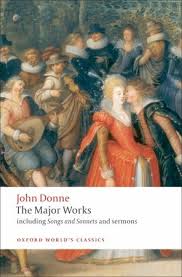
‘The Good-Morrow’ by John Dunn one of the Bard of Bat Yam, POet Laureate of Zion's favourite poems

I wonder, by my troth, what thou and I
Did, till we loved? Were we not weaned till then?
But sucked on country pleasures, childishly?
Or snorted we in the Seven Sleepers’ den?
’Twas so; but this, all pleasures fancies be.
If ever any beauty I did see,
Which I desired, and got, ’twas but a dream of thee.

And now good-morrow to our waking souls,
Which watch not one another out of fear;
For love, all love of other sights controls,
And makes one little room an everywhere.
Let sea-discoverers to new worlds have gone,
Let maps to other, worlds on worlds have shown,
Let us possess one world, each hath one, and is one.

My face in thine eye, thine in mine appears,
And true plain hearts do in the faces rest;
Where can we find two better hemispheres,
Without sharp north, without declining west?
Whatever dies, was not mixed equally;
If our two loves be one, or, thou and I
Love so alike, that none do slacken, none can die.


‘I wonder, by my troth, what thou and I / Did, till we loved?’ With these frank and informal words, John Donne (1572-1631) begins one of his most remarkable poems, a poem often associated – as is much of Donne’s work – with the Metaphysical ‘school’ of English poets. But what is ‘The Good-Morrow’ actually about? In this post, we offer some notes towards an analysis of Donne’s ‘The Good-Morrow’ in terms of its language, meaning, and themes.

A brief summary of Donne’s poem might be helpful to start with. In the first stanza, he addresses his beloved and asks her to cast her mind back to before they were lovers. What was their existence like before they met and loved each other? Were they little more than babies, like infants who are not yet weaned off their mother’s breast? (‘Country pleasures’ has the same punning suggestion it carries in Shakespeare’s plays, such as Hamlet’s ‘country 


matters’: we are invited to concentrate on the first syllable of ‘country’.) Or, if not like children, were the two of them – the poet and his lover – asleep before they met? (‘Snorted’ here means ‘snored’.) Donne answers his own (rhetorical) questions by saying yes: before they met each other, any pleasures they enjoyed, or thought they enjoyed, were mere a mere shadow of the joy they now feel in each other’s company.

In the second stanza, Donne bids good morning, or good day (hence ‘The Good-Morrow’) to his and his lover’s souls, now waking from their ‘dream’ and experiencing real love. They look at each other, but not through fear or jealousy, but because they like to look at each other. Indeed, the sight of each other far exceeds any fondness they have for other pleasant sights, and the bedroom where they spend their time (they are newly loved up, after all!) has become their world: the real world beyond their bedroom is of little interest to them. Men may voyage across the sea to other lands, and men may even chart the locations of other worlds beyond our own – that is of no concern to us, Donne tells his lover. We don’t need those other worlds, because our bodies are a world in themselves, ready for the other to explore. This is what Donne means by ‘worlds on worlds’ and ‘each hath one, and is one’: he and his lover, he urges, should enjoy a bit of ‘world-on-world action’. His body is a new world for his beloved to explore, and her body is a world for him to possess and explore.

In the final stanza, Donne zooms in even further from the bodies of the two lovebirds, focusing on their eyes: he sees his face reflected in his lover’s eye, and her face appears in his eyes (meaning not only that she sees herself reflected in Donne’s eyes, but also that as he turns to face her she is in his line of vision). Their very hearts are exposed to each other, their devotion to each other plain in their expressions. (The eyes never lie and all that.) Donne then uses the metaphor of ‘hemispheres’ – half-worlds (worlds again!) – to convey the idea that she is his ‘other half’ and he hers. But in fact, Donne argues, his and his lover’s ‘hemispheres’ are better than the hemispheres that make up the Earth, since their love has no cold North Pole and no ‘declining West’ (suggesting that the sun will never set on their love for each other). Donne then throws in some alchemy for good measure, stating that ‘Whatever dies was not mixed equally’ – although this line might also be read as a reference to the male and female ‘seed’, which, according to mainstream medical theory at the time, had to be equally mixed if conception were to take place. Donne then concludes by saying that if their love for each other is felt equally strongly on both sides, then their love is strong and cannot die.

Even summarising ‘The Good-Morrow’ becomes a task of annotation and discussion, but then that’s so often the mark of a rich and complex poem. How should we interpret and analyse the poem’s meaning? It’s clearly a celebration of young love and a very candid depiction of two lovers sharing their bodies with each other. Like so 


many of Donne’s love poems, it takes us right into the bedroom, ‘between the sheets’ (as Simon Schama put it in a BBC documentary about John Donne). Most poets stop short of bringing us into the bedroom with them. Donne wants us right there between him and his beloved.

We’ll conclude this short introduction to, and analysis of, ‘The Good-Morrow’ with a few more glosses which readers may find of interest. In the first stanza, Donne likens himself and his lover to the Seven Sleepers, who were seven Christians sealed in a cave by the Roman Emperor Decius – who had a penchant for persecuting Christians – in around the year AD 250. These Christians reportedly slept for nearly 200 years before being woken up to find Christianity had become a world religion. The point of Donne’s analogy is that the love he and his lover feel for each other is like a new religion, that’s how devoted they are.

In the second stanza, Donne refers both to sea-travel to new worlds: the New World of the Americas was just being explored and colonised at this time, by England and Spain, chiefly. But Donne also suggests, when he writes of ‘maps to others’, that man is charting other worlds too: when Donne was writing, the revolution in astronomy was just underway, and Copernicus’ theory that the earth travelled around the sun (rather than vice versa) was being explored by Johannes Kepler and, slightly later, Galileo. As the twentieth-century poet and critic William Empson pointed out in ‘Donne the Space Man’, John Donne was peculiarly interested in travelling to other planets, and his poetry reflects this, making him unique among Elizabethan and Jacobean poets.

This is yet another reason to revere him, and in this summary and analysis of ‘The Good-Morrow’ we’ve tried to get across some of the richness and strangeness of Donne’s classic poem. What do you make of ‘The Good-Morrow’?

Saturday, December 2, 2017

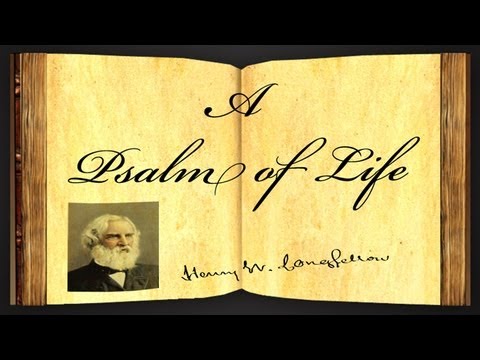
A Psalm Of Life By Henry Wadsworth Longfellow ... one of the favourite poems of the Bard of Bat am, Poet Laureate of Zion

Image result for A Psalm Of Life

Tell me not, in mournful numbers,
Life is but an empty dream!—
For the soul is dead that slumbers,
And things are not what they seem.

Life is real! Life is earnest!
And the grave is not its goal;
Dust thou art, to dust returnest,
Was not spoken of the soul.

Not enjoyment, and not sorrow,
Is our destined end or way;
But to act, that each to-morrow
Find us farther than to-day.

Art is long, and Time is fleeting,
And our hearts, though stout and brave,
Still, like muffled drums, are beating
Funeral marches to the grave.

In the world's broad field of battle,
In the bivouac of Life,
Be not like dumb, driven cattle!
Be a hero in the strife!

Trust no Future, howe'er pleasant!
Let the dead Past bury its dead!
Act,—act in the living Present!
Heart within, and God o'erhead!

Lives of great men all remind us
We can make our lives sublime,
And, departing, leave behind us
Footprints on the sands of time;

Footprints, that perhaps another,
Sailing o'er life's solemn main,
A forlorn and shipwrecked brother,
Seeing, shall take heart again.

Let us, then, be up and doing,
With a heart for any fate;
Still achieving, still pursuing,
Learn to labor and to wait.


"A Psalm of Life" is a poem written by American writer Henry Wadsworth Longfellow, often subtitled "What the Heart of the Young Man Said to the Psalmist"

Composition and publication history

Longfellow wrote the poem shortly after completing lectures on German writer Johann Wolfgang von Goethe and was heavily inspired by him. He was also inspired to write it by a heartfelt conversation he had with friend and fellow professor at Harvard University Cornelius Conway Felton; the two had spent an evening "talking of matters, which lie near one's soul:–and how to bear one's self doughtily in Life's battle: and make the best of things".. The next day, he wrote "A Psalm of Life". Longfellow was further inspired by the death of his first wife, Mary Storer Potter, and attempted to convince himself to have "a heart for any fate".

The poem was first published in the October 1838 issue of The Knickerbocker,[1] though it was attributed only to "L." Longfellow was promised five dollars for its publication, though he never received payment. This original publication also included a slightly altered quote from Richard Crashaw as an epigram: "Life that shall send / A challenge to its end, / And when it comes, say, 'Welcome, friend.'" "A Psalm of Life" and other early poems by Longfellow, including "The Village Blacksmith" and "The Wreck of the Hesperus", were collected and published as Voices of the Night in 1839. This volume sold for 75 cents and, by 1842, had gone into six editions.

In the summer of 1838, Longfellow wrote "The Light of Stars", a poem which he called "A Second Psalm of Life". His 1839 poem inspired by the death of his wife, "Footsteps of Angels", was similarly referred to as "Voices of the Night: A Third Psalm of Life". Another poem published in Voices of the Night titled "The Reaper and the Flowers" was originally subtitled "A Psalm of Death".

Analysis


The poem, written in an ABAB pattern, is meant to inspire its readers to live actively, and neither to lament the past nor to take the future for granted. The didactic message is underscored by a vigorous trochaic meter and frequent exclamation. Answering a reader's question about the poem in 1879, Longfellow himself summarized that the poem was "a transcript of my thoughts and feelings at the time I wrote, and of the conviction therein expressed, that Life is something more than an idle dream."Richard Henry Stoddard referred to the theme of the poem as a "lesson of endurance".

Longfellow wrote "A Psalm of Life" at the beginning of a period in which he showed an interest in the Judaic, particularly strong in the 1840s and 1850s. More specifically, Longfellow looked at the American versions or American responses to Jewish stories. Most notable in this strain is the poet's "The Jewish Cemetery at Newport", inspired by the Touro Cemeteryin Newport, Rhode Island.

Further, the influence of Goethe was noticeable. In 1854, an English acquaintance suggested "A Psalm of Life" was merely a translation. Longfellow denied this, but admitted he may have had some inspiration from him as he was writing "at the beginning of my life poetical, when a thousand songs were ringing in my ears; and doubtless many echoes and suggestions will be found in them. Let the fact go for what it is worth".
Response

"A Psalm of Life" became a popular and oft-quoted poem, such that Longfellow biographer Charles Calhoun noted it had risen beyond being a poem and into a cultural artifact. Among its many quoted lines are "footprints on the sands of time".In 1850, Longfellow recorded in his journal of his delight upon hearing it quoted by a minister in a sermon, though he was disappointed when no member of the congregation could identify the source.] Not long after Longfellow's death, biographer Eric S. Robertson noted, "The 'Psalm of Life,' great poem or not, went straight to the hearts of the people, and found an echoing shout in their midst. From the American pulpits, right and left, preachers talked to the people about it, and it came to be sung as a hymn in churches." The poem was widely translated into a variety of languages, including Sanskrit.] Joseph Massel translated the poem, as well as others from Longfellow's later collection Tales of a Wayside Inn, into Hebrew.

Calhoun also notes that "A Psalm of Life" has become one of the most frequently memorized and most ridiculed of English poems, with an ending reflecting "Victorian cheeriness at its worst". Modern critics have dismissed its "sugar-coated pill" promoting a false sense of security. One story has it that a man once approached Longfellow and told him that a worn, hand-written copy of "A Psalm of Life" saved him from suicide.] Nevertheless, Longfellow scholar Robert L. Gale referred to "A Psalm of Life" as "the most popular poem ever written in English". Edwin Arlington Robinson, an admirer of Longfellow's, likely was referring to this poem in his "Ballade by the Fire" with his line, "Be up, my soul". Despite Longfellow's dwindling reputation among modern readers and critics, "A Psalm of Life" remains one of the few of his poems still anthologized.


Monday, November 27, 2017

See you later, Alligator See you soon , Baboon; Stay loose , Bull Moose Bye-bye, Butterfly by the Bard of Bat Yam, Poet Laureate of Zion


Image result for See you later alligator

See you later, Alligator 
See you soon , Baboon
Stay loose , Bull Moose 
Bye-bye, Butterfly
Must Hit The trail , Tiny Snail
Gotta Bail , Blue Whale
Go to go , Buffalo 
Chow chow, Brown Cow 
Be sweet Parakeet
Bye for now , Brown Cow
Give a hug, Ladybug 
In an hour , Sun flower 
Maybe two, Kangeroo
Adieu , Cockatoo
Cheers , Big Ears 
Till then, Penguin 
Must hit the road,Happy Toad
So Long, King Kong
Adios , Hippos 
In a shake, Garter Snake
Shalom , Bom Bom 
Hasta manama , Iguana
Time to scoot, Little Newt
Better swish ,Jellyfish
Take care , Black Bear
In a while Crocodile
Give a kiss, Goldfish
Out the door , Dinasaur
Aloha , Iguana 
Chop chop Lollipop
Get in line, Porcupine
Bye bye, Dragon Fly
Take Care, Black Bear 
After a while, Crocodile
Toodle-ee-oo, Kangaroo
See you soon, Raccoon 
Time to go, Buffalo
Better shake, Rattle Snake
Can’t stay, Blue Jay 
MaƱana, iguana 
Arrivederci, Mrs Darcy 
Take care, Polar Bear 
This is the  end, My Friend!

Wednesday, November 22, 2017

Love's Language By Ella Wheeler Wilcox... a favourite poem of the Bard of Bat Yam , Poet Laureate of Zion


Ella Wheeler Wilcox (1850 - 1919) was an American author and poet. Her best-known work was Poems of Passion. Her most enduring work was "Solitude", which contains the lines: "Laugh, and the world laughs with you; Weep, and you weep alone". Her autobiography, The Worlds and I, was published in 1918, a year before her death.

How does Love speak?

In the faint flush upon the telltale cheek,
And in the pallor that succeeds it; by
The quivering lid of an averted eye--
The smile that proves the parent to a sigh
Thus doth Love speak.

How does Love speak?

By the uneven heart-throbs, and the freak
Of bounding pulses that stand still and ache,
While new emotions, like strange barges, make
Along vein-channels their disturbing course;
Still as the dawn, and with the dawn's swift force--
Thus doth Love speak.

How does Love speak?

In the avoidance of that which we seek--
The sudden silence and reserve when near--
The eye that glistens with an unshed tear--
The joy that seems the counterpart of fear,
As the alarmed heart leaps in the breast,
And knows, and names, and greets its godlike guest--
Thus doth Love speak.

How does Love speak?

In the proud spirit suddenly grown meek--
The haughty heart grown humble; in the tender
And unnamed light that floods the world with splendor;
In the resemblance which the fond eyes trace
In all fair things to one beloved face;
In the shy touch of hands that thrill and tremble;
In looks and lips that can no more dissemble--
Thus doth Love speak.

How does Love speak?

In the wild words that uttered seem so weak
They shrink ashamed in silence; in the fire
Glance strikes with glance, swift flashing high and higher,
Like lightnings that precede the mighty storm;
In the deep, soulful stillness; in the warm,
Impassioned tide that sweeps through throbbing veins,
Between the shores of keen delights and pains;
In the embrace where madness melts in bliss,
And in the convulsive rapture of a kiss--
Thus doth Love speak.