Showing posts with label The Darori foundation. Show all posts

Saturday, March 31, 2018

April Fool , memories of the Bat Of Bat Yam (#BatOfBatYam) , Poet Laureate Of Zion(#POetLaureateOfZion) and Stephen Darori (#stephendrus, #stephedarori)

Image result for April Fool


Erin put a whoopie cushion
on the teacher’s chair.
Cassandra told the teacher
that a bug was in her hair.


Alexandra brought an apple
with a purple gummy worm
and gave it to the teacher
just to see if she would squirm.


Joseph left a piece of plastic
dog doo on the floor,
and David put some plastic vomit
in the teacher’s drawer.


Zoeyput a goldfish
in the teacher’s drinking glass.
These April Fool’s Day pranks
are ones that you could use in class.


Before you go and try them, though,
there’s something I should mention:
The teacher wasn’t fooling
when she put us in detention.

Wednesday, March 7, 2018

-It’s done like this- she says as she bends down, by the Bard of Bat Yam (#BardOfBatYa) , Poet Laureate Of Zion (#PoetLaureateOfZion)


-It’s done like this- she says 
as she bends down, 
folds and finally rests 
on her knees before me and
you snap the silence with 
the catch of your breath.

-Watch, just like this- her tongue 
a blade that splits my slash and
presses flat against my pearl, 
your moans her mouth’s metronome.

The quiet standstill screams
as I thrust my hips forward, her
making no movement save the ceaseless 
force I slowly grind my way through,
my gasps filling our ears like a flood.

Our hands plow deep furrows now 
through her head while your steady
slap-stroking readies the seed
we will plant there.

Friday, March 2, 2018

In my anticipation, I’m musing by the Bard of Bat Yam, Poet Laureaute of Zion

...

In my anticipation, I’m musing
Of when my fear is strong enough to taste,
And my frustration... You like refusing?
When I shudder, when I plead,
Do you relish every time I beg for haste?
My voice like butter--do you feel greed?
Do you get pleasured highs from power surges?
As I, when you exploit my mounting urges?

And my emancipation--when will it come?
And will we cross the line so far I’ll want
My liberation? Would you be numb?
My frame in throes, my dried mouth pants,
Do you relish every shudder when you taunt? 
How much excitement goes with this romance?
May we behold each other for a time
When your enjoyment far eclipses mine!

Wednesday, February 28, 2018

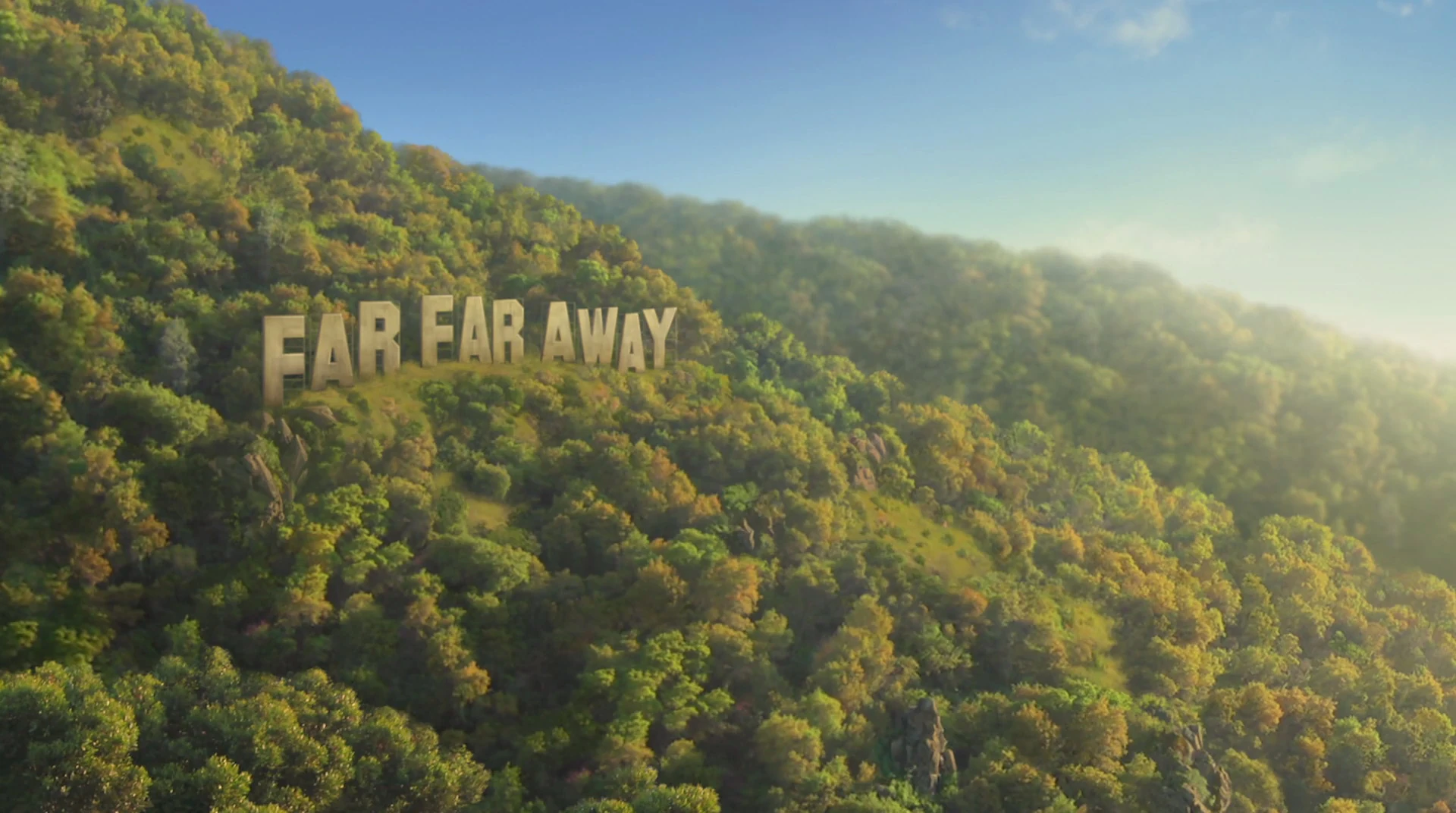
Mamooshka .... Far Far Away


Image result for Far Far Away


I lay in bed and think about you,
I love you so, I don't know what to do.
I feel your warmth at my side in bed,
the pain in my heart moves straight to my soul.

So far away, yet always so near,
you're the reason I'm in love.
I await the times, when we talk all night.
I await the times our hands come together.

To feel you close, is my true desire,
our eyes come together, like a million stars.
You shine so brightly, I'm blind for a moment,
your smile so sweet, it makes me dizzy!

I await the time, when we embrace each other,
To hear you say, I love you too!
Even though you aren't here,
I still miss you so.

Mamoos, I will hka love you forever, so far away my love!

Mamooshka ..... would you be my Valentine

Image result for Would you be my valentine?

Would you be my valentine?
I'll give you x's and o's
Heart shaped candy
And a little rose

Would you be my valentine?
And mean everything to me
I'll show you anything you'd ever wanted
Be everything you need

Would you be my valentine?
And look into my eyes
Tell me everything you're feeling
With nothing left to hide

Would you be my valentine?
The world is yours and mine
So many things I want to show you
With only one place in mind

Would you be my valentine?
And smile that gorgeous smile
Dance the day and night away
Get lost for a little while

Would you be my valentine?
Making all my dreams come true
Cause this is your special day
I dedicate it to you.

Wednesday, November 22, 2017

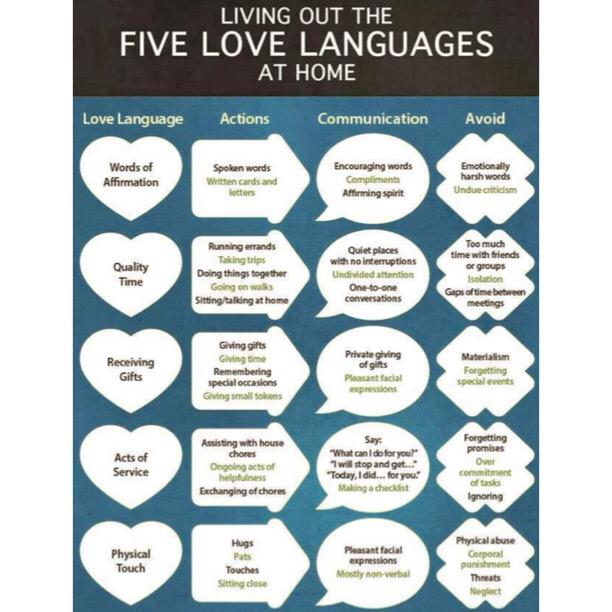
Love's Language By Ella Wheeler Wilcox... a favourite poem of the Bard of Bat Yam , Poet Laureate of Zion


Ella Wheeler Wilcox (1850 - 1919) was an American author and poet. Her best-known work was Poems of Passion. Her most enduring work was "Solitude", which contains the lines: "Laugh, and the world laughs with you; Weep, and you weep alone". Her autobiography, The Worlds and I, was published in 1918, a year before her death.

How does Love speak?

In the faint flush upon the telltale cheek,
And in the pallor that succeeds it; by
The quivering lid of an averted eye--
The smile that proves the parent to a sigh
Thus doth Love speak.

How does Love speak?

By the uneven heart-throbs, and the freak
Of bounding pulses that stand still and ache,
While new emotions, like strange barges, make
Along vein-channels their disturbing course;
Still as the dawn, and with the dawn's swift force--
Thus doth Love speak.

How does Love speak?

In the avoidance of that which we seek--
The sudden silence and reserve when near--
The eye that glistens with an unshed tear--
The joy that seems the counterpart of fear,
As the alarmed heart leaps in the breast,
And knows, and names, and greets its godlike guest--
Thus doth Love speak.

How does Love speak?

In the proud spirit suddenly grown meek--
The haughty heart grown humble; in the tender
And unnamed light that floods the world with splendor;
In the resemblance which the fond eyes trace
In all fair things to one beloved face;
In the shy touch of hands that thrill and tremble;
In looks and lips that can no more dissemble--
Thus doth Love speak.

How does Love speak?

In the wild words that uttered seem so weak
They shrink ashamed in silence; in the fire
Glance strikes with glance, swift flashing high and higher,
Like lightnings that precede the mighty storm;
In the deep, soulful stillness; in the warm,
Impassioned tide that sweeps through throbbing veins,
Between the shores of keen delights and pains;
In the embrace where madness melts in bliss,
And in the convulsive rapture of a kiss--
Thus doth Love speak.

Saturday, November 18, 2017

Good Morning ,Katy, Good Morning

Image result for good morning pictures

Good Morning ,Katy, Good Morning
Every day brings so much more
To look forward to ,fly high and soar
Every moment brings so much delight
Just being with you,makes everything feel right
Good morning ,Katy Good Morning

Sunday, October 15, 2017

Percy Bysshe Shelley: “Ozymandias” A poem to outlast empires. by the Bard of Bat Yam, Poet Laureate of Zion

Image result for “Ozymandias

I met a traveller from an antique land
Who said: “Two vast and trunkless legs of stone
Stand in the desert . . . Near them, on the sand,
Half sunk, a shattered visage lies, whose frown,
And wrinkled lip, and sneer of cold command,
Tell that its sculptor well those passions read
Which yet survive, stamped on these lifeless things,
The hand that mocked them, and the heart that fed:
And on the pedestal these words appear:
‘My name is Ozymandias, king of kings:
Look on my works, ye Mighty, and despair!'
Nothing beside remains. Round the decay
Of that colossal wreck, boundless and bare
The lone and level sands stretch far away.”
Shelley’s friend the banker Horace Smith stayed with the poet and his wife Mary (author of Frankenstein) in the Christmas season of 1817. One evening, they began to discuss recent discoveries in the Near East. In the wake of Napoleon’s conquest of Egypt in 1798, the archeological treasures found there stimulated the European imagination. The power of pharaonic Egypt had seemed eternal, but now this once-great empire was (and had long been) in ruins, a feeble shadow.

Shelley and Smith remembered the Roman-era historian Diodorus Siculus, who described a statue of Ozymandias, more commonly known as Rameses II (possibly the pharaoh referred to in the Book of Exodus). Diodorus reports the inscription on the statue, which he claims was the largest in Egypt, as follows: “King of Kings Ozymandias am I. If any want to know how great I am and where I lie, let him outdo me in my work.” (The statue and its inscription do not survive, and were not seen by Shelley; his inspiration for “Ozymandias” was verbal rather than visual.)

Stimulated by their conversation, Smith and Shelley wrote sonnets based on the passage in Diodorus. Smith produced a now-forgotten poem with the unfortunate title “On a Stupendous Leg of Granite, Discovered Standing by Itself in the Deserts of Egypt, with the Inscription Inserted Below.” Shelley’s contribution was “Ozymandias,” one of the best-known sonnets in European literature.

In addition to the Diodorus passage, Shelley must have recalled similar examples of boastfulness in the epitaphic tradition. In the Greek Anthology (8.177), for example, a gigantic tomb on a high cliff proudly insists that it is the eighth wonder of the world. Here, as in the case of “Ozymandias,” the inert fact of the monument displaces the presence of the dead person it commemorates: the proud claim is made on behalf of art (the tomb and its creator), not the deceased. Though Ozymandias believes he speaks for himself, in Shelley’s poem his monument testifies against him.

“Ozymandias” has an elusive, sidelong approach to its subject. The poem begins with the word “I”—but the first person here is a mere framing device. The “I” quickly fades away in favor of a mysterious “traveler from an antique land.” This wayfarer presents the remaining thirteen lines of the poem.

The reader encounters Shelley’s poem like an explorer coming upon a strange, desolate landscape. The first image that we see is the “two vast and trunkless legs of stone” in the middle of a desert. Column-like legs but no torso: the center of this great figure, whoever he may have been, remains missing. The sonnet comes to a halt in the middle of its first quatrain. Are these fragmentary legs all that is left?

After this pause, Shelley’s poem describes a “shattered visage,” the enormous face of Ozymandias. The visage is taken apart by the poet, who collaborates with time’s ruinous force. Shelley says nothing about the rest of the face; he describes only the mouth, with its “frown,/And wrinkled lip, and sneer of cold command.” Cold command is the emblem of the empire-building ruler, of the tyrannical kind that Shelley despised. Ozymandias resembles the monstrous George III of our other Shelley sonnet, “England in 1819.” (Surprisingly, surviving statues of Rameses II, aka Ozymandias, show him with a mild, slightly mischievous expression, not a glowering, imperious one.)

The second quatrain shifts to another mediating figure, now not the traveler but the sculptor who depicted the pharaoh. The sculptor “well those passions read,” Shelley tells us: he intuited, beneath the cold, commanding exterior, the tyrant’s passionate rage to impose himself on the world. Ozymandias’ intense emotions “survive, stamp’d on these lifeless things.” But as Shelley attests, the sculptor survives as well, or parts of him do: “the hand that mocked” the king’s passions “and the heart that fed.” (The artist, like the tyrant, lies in fragments.) “Mocked” here has the neutral sense of “described” (common in Shakespeare), as well as its more familiar meaning, to imitate in an insulting way. The artist mocked Ozymandias by depicting him, and in a way that the ruler could not himself perceive (presumably he was satisfied with his portrait). “The heart that fed” is an odd, slightly lurid phrase, apparently referring to the sculptor’s own fervent way of nourishing himself on his massive project. The sculptor’s attitude might resemble—at any event, it certainly suits—the pharaoh’s own aggressive enjoyment of empire. Ruler and artist seem strangely linked here; the latter’s contempt for his subject does not free him from Ozymandias’ enormous shadow.

The challenge for Shelley will thus be to separate himself from the sculptor’s harsh satire, which is too intimately tied to the power it opposes. If the artistic rebel merely plays Prometheus to Ozymandias’ Zeus, the two will remain locked in futile struggle (the subject of Shelley’s great verse drama Prometheus Unbound). Shelley’s final lines, with their picture of the surrounding desert, are his attempt to remove himself from both the king and the sculptor—to assert an uncanny, ironic perspective, superior to the battle between ruler and ruled that contaminates both.

The sestet moves from the shattered statue of Ozymandias to the pedestal, with its now-ironic inscription: “‘My name is Ozymandias, king of kings./Look on my works, ye mighty, and despair!’” Of course, the pharaoh’s “works” are nowhere to be seen, in this desert wasteland. The kings that he challenges with the evidence of his superiority are the rival rulers of the nations he has enslaved, perhaps the Israelites and Canaanites known from the biblical account. The son and successor of Ozymandias/Rameses II, known as Merneptah, boasts in a thirteenth-century BCE inscription (on the “Merneptah stele,” discovered in 1896 and therefore unknown to Shelley) that “Israel is destroyed; its seed is gone”—an evidently overoptimistic assessment.

The pedestal stands in the middle of a vast expanse. Shelley applies two alliterative phrases to this desert, “boundless and bare” and “lone and level.” The seemingly infinite empty space provides an appropriate comment on Ozymandias’ political will, which has no content except the blind desire to assert his name and kingly reputation.

“Ozymandias” is comparable to another signature poem by a great Romantic, Samuel Taylor Coleridge’s “Kubla Khan.” But whereas Coleridge aligns the ruler’s “stately pleasure dome” with poetic vision, Shelley opposes the statue and its boast to his own powerful negative imagination. Time renders fame hollow: it counterposes to the ruler’s proud sentence a devastated vista, the trackless sands of Egypt.

Ozymandias and his sculptor bear a fascinating relation to Shelley himself: they might be seen as warnings concerning the aggressive character of human action (whether the king’s or the artist’s). Shelley was a ceaselessly energetic, desirous creator of poetry, but he yearned for calm. This yearning dictated that he reach beyond his own willful, anarchic spirit, beyond the hubris of the revolutionary. In his essay “On Life,” Shelley writes that man has “a spirit within him at enmity with dissolution and nothingness.” In one way or another, we all rebel against the oblivion to which death finally condemns us. But we face, in that rebellion, a clear choice of pathways: the road of the ardent man of power who wrecks all before him, and is wrecked in turn; or the road of the poet, who makes his own soul the lyre or Aeolian harp for unseen forces. (One may well doubt the strict binary that Shelley implies, and point to other possibilities.) Shelley’s limpid late lyric “With a Guitar, to Jane” evokes wafting harmonies and a supremely light touch. This music occupies the opposite end of the spectrum from Ozymandias’ futile, resounding proclamation. Similarly, in the “Ode to the West Wind,” Shelley’s lyre opens up the source of a luminous vision: the poet identifies himself with the work of song, the wind that carries inspiration. The poet yields to a strong, invisible power as the politician cannot.

In a letter written during the poet’s affair with Jane Williams, Shelley declares, “Jane brings her guitar, and if the past and the future could be obliterated, the present would content me so well that I could say with Faust to the passing moment, ‘Remain, thou, thou art so beautiful.’” The endless sands of “Ozymandias” palpably represent the threatening expanse of past and future. Shelley’s poem rises from the desert wastes: it entrances us every time we read it, and turns the reading into a “now.”

The critic Leslie Brisman remarks on “the way the timelessness of metaphor escapes the limits of experience” in Shelley. Timelessness can be achieved only by the poet’s words, not by the ruler’s will to dominate. The fallen titan Ozymandias becomes an occasion for Shelley’s exercise of this most tenuous yet persisting form, poetry. Shelley’s sonnet, a brief epitome of poetic thinking, has outlasted empires: it has witnessed the deaths of boastful tyrants, and the decline of the British dominion he so heartily scorned.

Saturday, October 14, 2017

Facebook By Dr Seuss by the Bard of Bat Yam, Poet Laureate of Zion

dr seuss funnies | Dr Seuss facebook funny - Best of social media at PMSLweb.com

The Conservative by the Bard of Bat Yam, Poet Laureate of Zion

Related image

Dr Seuss Does Facebook by the Bard of Bat Yam, Poet Laureate of Zion

Image result for Facebook Poem

Think how the meters of a distant tongue Gave figuration to men’s hopes and fears, by the Bard of Bat Yam , Poet Laureate of Zion

Related image
Think how the meters of a distant tongue
Gave figuration to men’s hopes and fears,
To passions gravity, to love its tears,
The chords with which our human hearts are strung.
Consider how the bards of old had sung
Before their numbers vanished with the years,
And how their harps delighted captive ears
When thought itself was green and fancy young.
Alas, my song cannot unburthen care
Nor life’s unceasing worriments remove;
And though my lays be lost on empty air,
Yet, days to come shall not these notes reprove:
Their sweetness imitates a single fair,
The music that is you, my only love.

The Reality of Facebook by the Bard of Bat Yam , Poet Laureate of Zion

Reality vs. Facebook.

I’d heard about social networking,
And how it was the next big thing,
So I just had to take a look,
And ended up on Facebook.

It only took me a little while,
To fill out most of my profile,
But I have spent many a night,
Figuring out the rest of the site.

I never realized I had so many friends,
The friend requests never end,
All the people I can’t stand at work,
And now the biggest high school jerk.

I have to admit I’ve learned a bunch,
I know what all my friends eat for lunch,
And it really helps me that I know,
Everyone’s favorite TV show.

The work on Facebook never stops,
I have to water my imaginary crops,
Send get-well wishes to Farmville quick,
My friend’s imaginary cow got sick.

I now realize my chances are dire,
Of ever building a Mafia empire,
And perhaps it is a bit of a shame,
My It Girl will never go on to fame.

My kids' statuses tell me of their life,
At dinner time I get poked by the wife,
I try to keep my friend count nice and fat,
So, I even signed up the dog and cat.

I guess you can say my life’s complete,
I have more friends than I’ll ever meet,
On Facebook I can roam far and wide,
And I never have to go outside.

Wednesday, October 4, 2017

The No Food Diet by Bard of Bat Yam, Poet Laureate of Zion

Image result for The No Food Diet cartoon

The no food diet. 
The diet when you stare at food 
and you think about food 
and your mouth begins to water 

but 
you deprive yourself of the spoils that food brings. 

You think that your reflection in the mirror is more important.
And maybe it is, 
maybe looking better is more important than that chocolate chip cookie. 

But your organs shutting down
and your bones popping out, 
is that worth it? 

No, Nothing is worth that. 
Nothing is worse than being so miserable that you can't bring yourself to eat.

It stops being a restrictive diet and it becomes a war, 
a war with yourself. 
Maybe if you had just eaten that chocolate chip cookie, 
just maybe you wouldn't have this life-long battle.

Sunday, October 1, 2017

Allahu Akbar again in France : A Reflection On the Murder of Two Women Outside the Gare Saint Charles in Marseilles, France, This Morning, October 1, 2017 by the Bard of Bat Yam, Poet Laureate of Zion

Image result for the Gare Saint Charles in Marseilles, France,


“Allahu akbar!” rang the words clear,
The man was shouting them at me.
No way of knowing they would be
The last words that I would ever hear.

For such Aphrase! I made a mental note
set aside some time to meditate
On what it means to say that “God is great!”
. . final thought before he slit my throat.
mas’baha is strung with many a unkept bead—
Exactly ninety-nine—to honor, Mohamed his laud,
And glorify the holy Names of God;
Each Name an inspiration, prayer, and creed.
One hundred beads would be a travesty.
And God as “Slayer of Women” is blasphemy

Thursday, September 14, 2017

Risotto by the Bard of Bat Yam, Poet Laureate of Zion

Image result for risotto

The most obstreperous part about making something, also the best,
Is existing in the reality of middle,
Sustaining an act of rigorous radical imagination,
I simmered a broth: onion, lemon, a big handful of mint.

The phone did ring. With my left
Hand I answered it,
Sautéing the rice, then adding the mixed shrimp sea food broth
Slowly, one ladle at a time, with my right. What’s up?

The miracle of risotto, it’s easy to miss, is the moment when the husks dissolve,
Each grain of rice releasing its tiny explosion of starch.

God help you take it off the heat just then, let it sit
While you shave the parmesan into paper-thin curls,
It must be perfectly creamy,
But still have a bite.

There will be dishes to do,The moon will rise,

A cacophony of hoots, cackles, and wails.
Residuals of Tastes and Smells
Light intoxication  half bottleiced Chardonnay


Ingredients:

5 cups chicken or seafood broth, plus more as needed
1 (8-ounce) bottle clam juice
1/2 teaspoon saffron threads, crushed
2 tablespoons extra-virgin olive oil
1/4 cup minced shallots (about 2)
2 cups arborio or carnaroli rice
1/2 cup dry white wine
1/2 pound bay scallops
1/2 pound medium shrimp, peeled and deveined
1/2 pound squid (calamari) tubes, sliced into rings
1 teaspoon fine sea salt
2 tablespoons finely chopped fresh parsley


Method:
Heat broth, clam juice and saffron to a boil in a medium saucepot. Reduce heat and keep simmering.

Meanwhile, heat oil in a large saucepot over medium-high heat. Add shallot and cook until translucent, about 2 minutes. Stir in rice and toast cook until translucent, about 2 minutes. Stir in wine and cook, stirring constantly, until liquid is absorbed.

Set timer for 14 minutes and begin to add saffron broth, 1/2 cup at a time, stirring each time until most liquid is absorbed. After 14 minutes, stir in scallops, shrimp, squid and salt. Continue to cook and stir, adding broth 1/2 cup at a time until rice is al dente and seafood is just cooked through, about 6 minutes (you may not use all broth). Stir in parsley and serve.